
How to Sync Etsy Listings to Instagram Without Manual Uploads
Set up an Etsy product feed for Instagram shopping, reduce manual catalog work, and test the connection before you rely on it.

Most Etsy shops do not need another place to re-enter product titles, photos, prices, and availability. They need one dependable feed that turns the listings they already maintain into a usable social-shopping catalog.
That is the job Catalog Generator for Etsy is designed to handle: it provides a feed URL for your Etsy listings so you can connect them to a Meta catalog instead of uploading products one by one. The app has a seven-day free trial, then costs $5 per month.

Decide if a feed is the right fix
A live feed is useful when your Etsy shop changes often enough that manual catalog upkeep becomes a second job. New listings, price edits, stock changes, and seasonal swaps should have one source of truth: Etsy. The catalog should follow it.
It is not a shortcut around storefront quality. Clean up weak titles, missing images, and confusing variation names first. A feed will faithfully move those problems downstream. If a seasonal refresh is coming, use this Etsy bulk-edit test process before connecting the catalog.
The setup, in the order that avoids rework
-
Prepare the Meta side. Create or use a Meta Business account, and make sure the Facebook Page and Instagram account you intend to use are connected to it. Your Instagram account needs to be set up for business use before product tagging can matter.
-
Verify the Etsy shop domain. In Meta Business settings, add the shop-specific Etsy domain shown in your shop URL. Meta provides a verification tag; add it through Etsy Shop Manager’s Facebook Shops area, then return to Meta and verify. Do not guess at this step: verify the actual shop domain that redirects to your store.
-
Get the feed URL. Sign in to Catalog Generator for Etsy, connect the Etsy shop, and copy the catalog URL it gives you. This is the handoff between Etsy and the catalog.
-
Create a catalog data source. In Meta Commerce Manager, choose to add items through a data feed, select a URL rather than a one-time file upload, and paste the URL from the app. Pick a refresh schedule you can support; daily is a sensible default for an active shop.
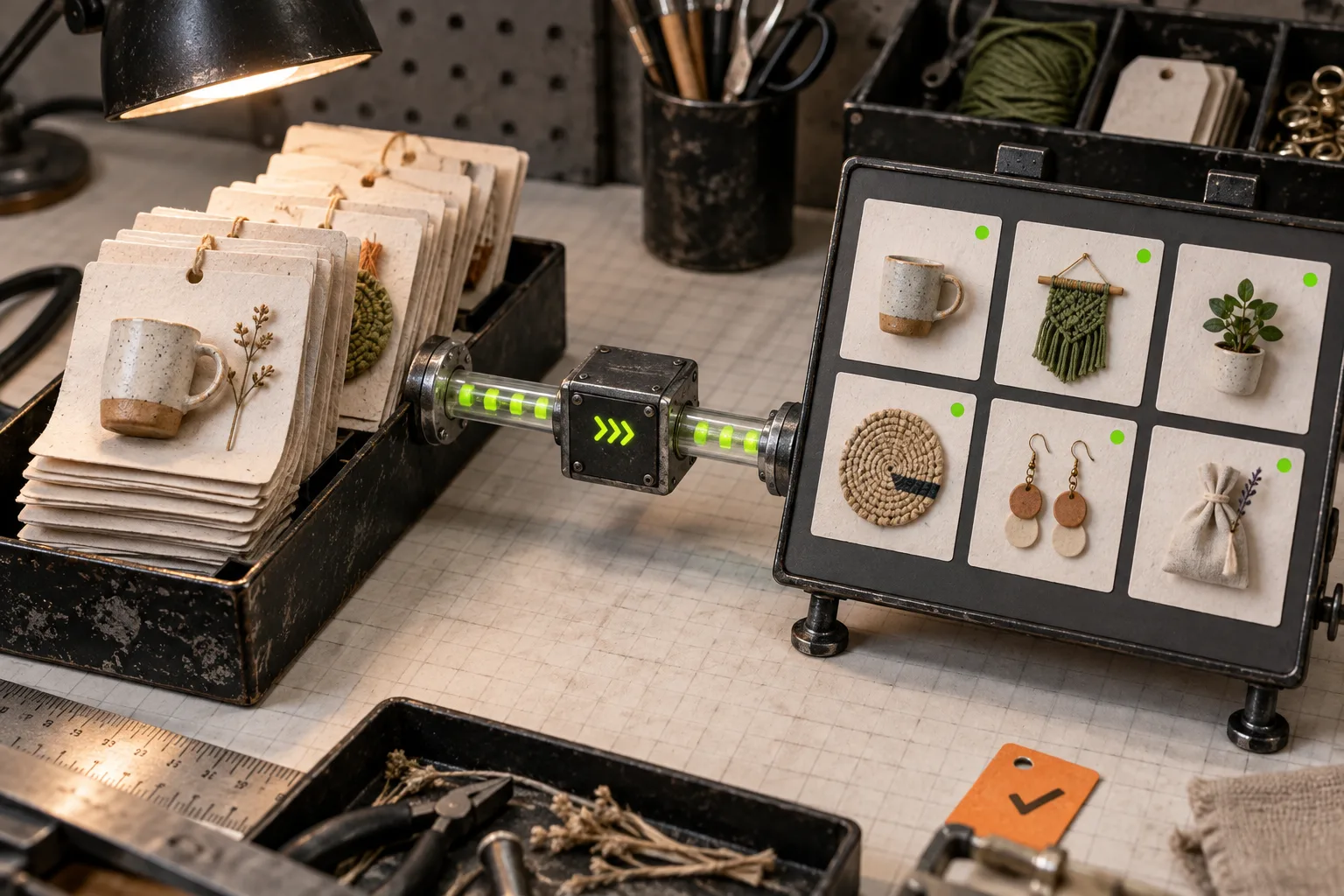
- Wait for the first ingest, then inspect it. Initial retrieval can take several minutes. Check a handful of listings that cover your real edge cases: one with variants, one on sale, one recently edited, and one with multiple images. A catalog that loads is not automatically a catalog you can trust.
For a wider view of the tradeoff, this guide on auditing an Etsy product feed before a seasonal sale is a useful companion. And if your work involves a bigger cleanup, the distinction between listing and variation edits keeps a small metadata fix from becoming a catalog mess.
What to test before you turn on product tagging
Use a short QA pass. Confirm that the correct destination URLs point back to the right Etsy listings, that sale prices appear as expected, and that image order makes sense in the catalog. Create or update one low-risk test listing in Etsy, then wait for the scheduled refresh and confirm the change appears. This is the only reliable way to prove you have synchronization rather than a static first import.

Also review the catalog’s warnings rather than treating them as background noise. Missing attributes and rejected items are easier to fix while the catalog is small. If you need to make many Etsy changes first, this bulk-editing guide covers a safer way to do that work.
Keep the system simple after launch
Once the feed is stable, manage products in Etsy and let the catalog refresh. Resist the urge to make the same correction in two places; that is how mismatches begin. Keep a small repeatable check for major launches: change a listing, wait for the scheduled fetch, inspect the catalog, and only then publish the Instagram post that tags it.
The practical payoff is not magic reach. It is less duplicated catalog administration and a cleaner path from a social post to the Etsy listing where the purchase happens. Start the Catalog Generator for Etsy free trial, connect one shop, and run the test-listing check before you build a campaign around it.